

The Vibe Design Workspace for your brand.
One design system across everything you ship.
Works with 21 coding agents, plug in and use directly
 Claude
 GPT · Codex
 Gemini
 Cursor Agent
 Copilot
 DeepSeek
 Qwen
Qwen Kimi
Kimi Grok
Grok OpenCode
 Aider
Aider Trae
Trae Devin
Devin Hermes
 Kiro
Kiro Kilo
Kilo Qoder
Qoder Mistral Vibe
 Antigravity
 Pi
PiHow it works
From one design system. To every scene.
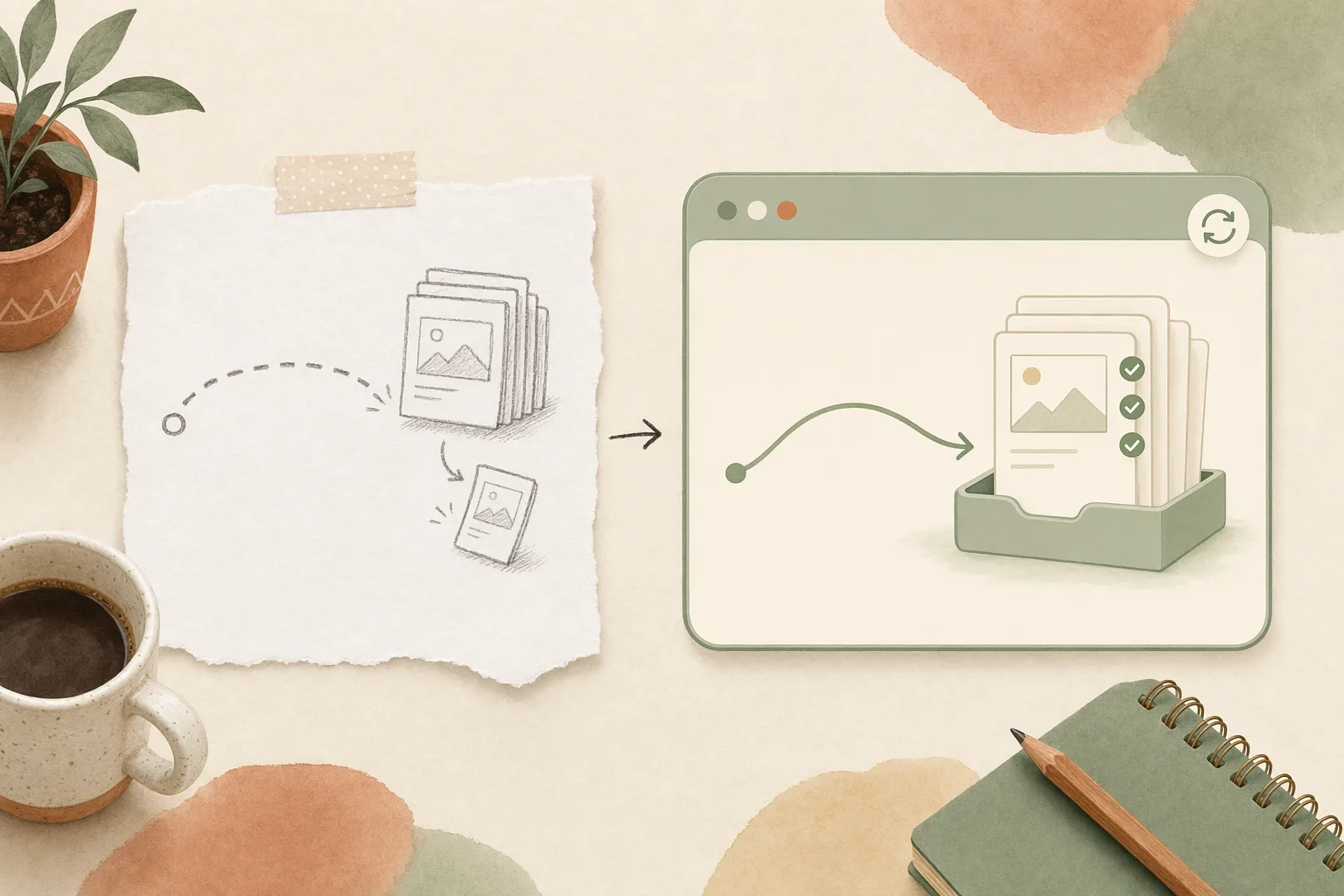
Ingest from any source.
Feed in everything that defines your brand: decks, sites, Figma, images, docs.
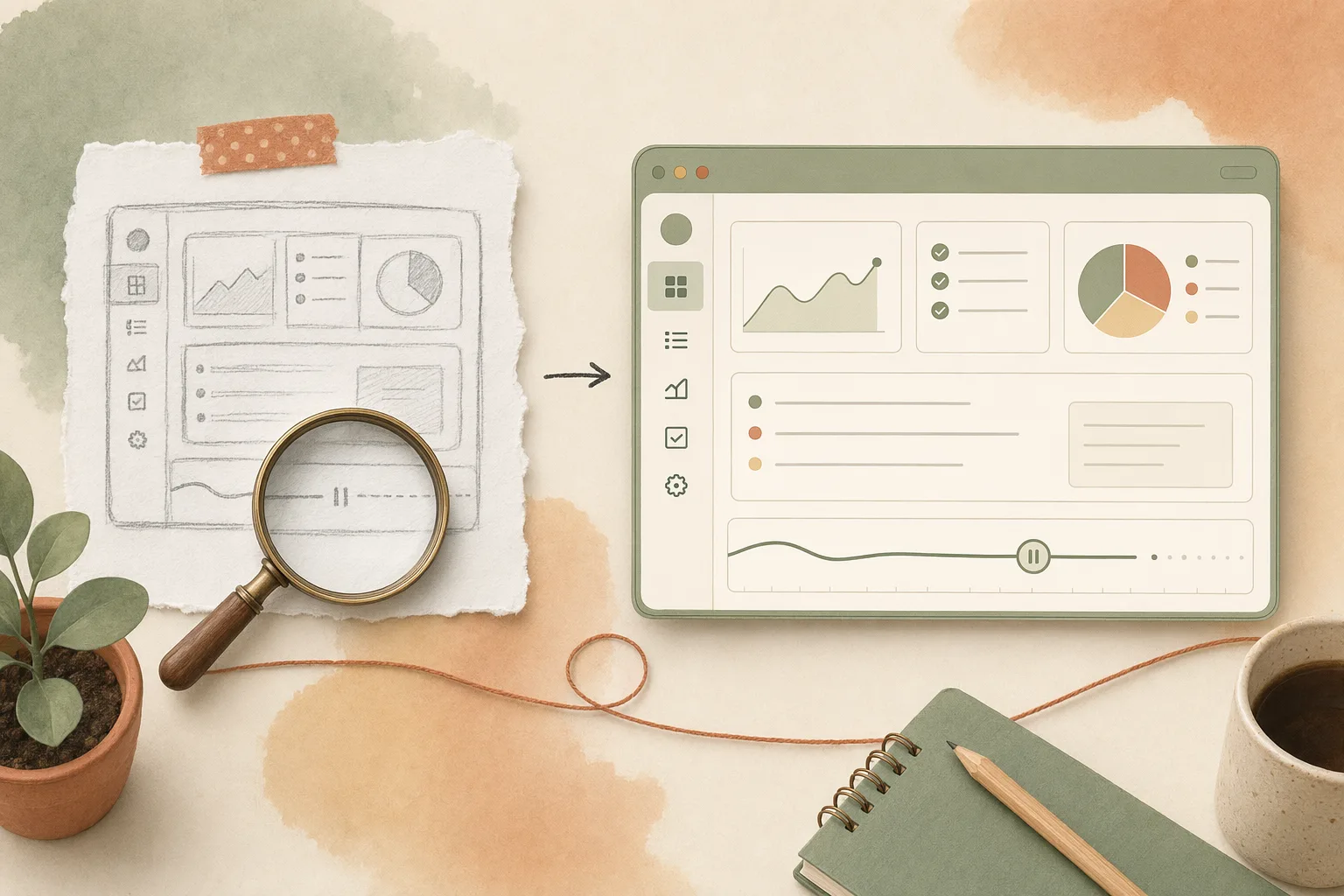
Systemise your brand.
Open Design unifies it into one brand kernel: colors, type, voice, imagery, rules.
 EMAIL
EMAIL VIDEO
VIDEO SITE
SITECreate every scene.
Slides, prototypes, marketing visuals, video. One canonical brand, called from anywhere.
Everything design needs. Built in.
Hundreds of brand systems, built in.
Start from a curated design system or systemise your own. Colors, type, radius, voice: change one thing and every artifact recalculates.
Try it: switch the brand or tap a radius step. The four artifacts recalculate live.
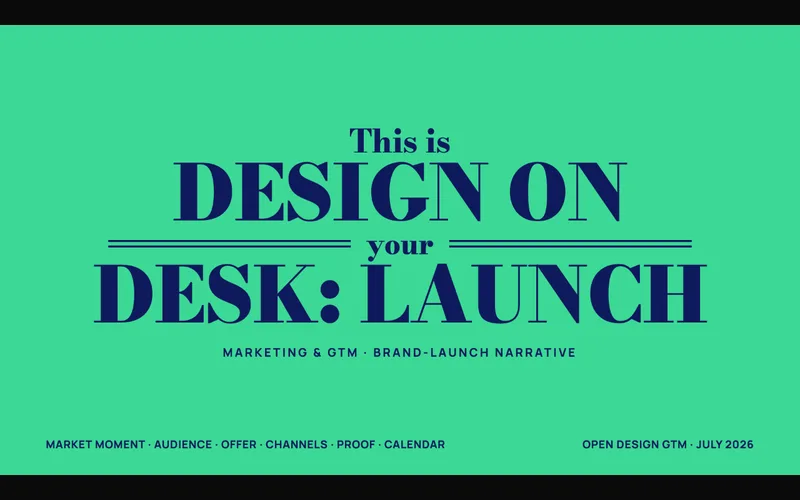
 115 templates · 152 systems
A loaded template library
Decks, sites, cards, film frames. Fork any of them and they take your brand.
 ● LIVE
Design to code, live in one click
Design is code here: every artifact is real HTML, not a mockup. It deploys straight to a live URL. No handoff, no rebuild.
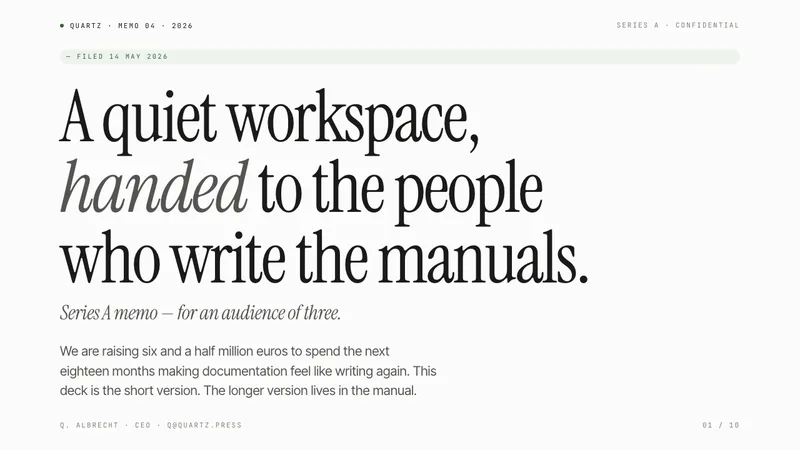
Everything stays editable
Nothing is a flat image. Tweak layout, copy, and style freely after generation.
 v23↺ brand kernel updated: minimal layouts · radius 8px · your tone
A brand system that self-evolves
Every choice feeds back into your brand system and memory, so each artifact lands more on-brand than the last.
Multimodal by default
Pages, decks, images, video, audio. Generated together, under one brand.
Plugins, right inside Codex
Call Open Design from Codex and get a real, editable artifact back in the flow.
Leads the Design benchmark
Best-in-class output quality on design tasks, measured against Codex and Claude Design on the public benchmark.
Design quality score
One workspace. The whole team, on brand.
Share the brand system, templates, and projects across your team. Everyone generates with the same kernel, every artifact lands in one library, and a change to the system recalculates everyone's work.
Shared brand kernel · Team template library · Review before publish
 Open Design · Team workspace
Three ways to use it
Desktop, self-hosted, or inside Codex.
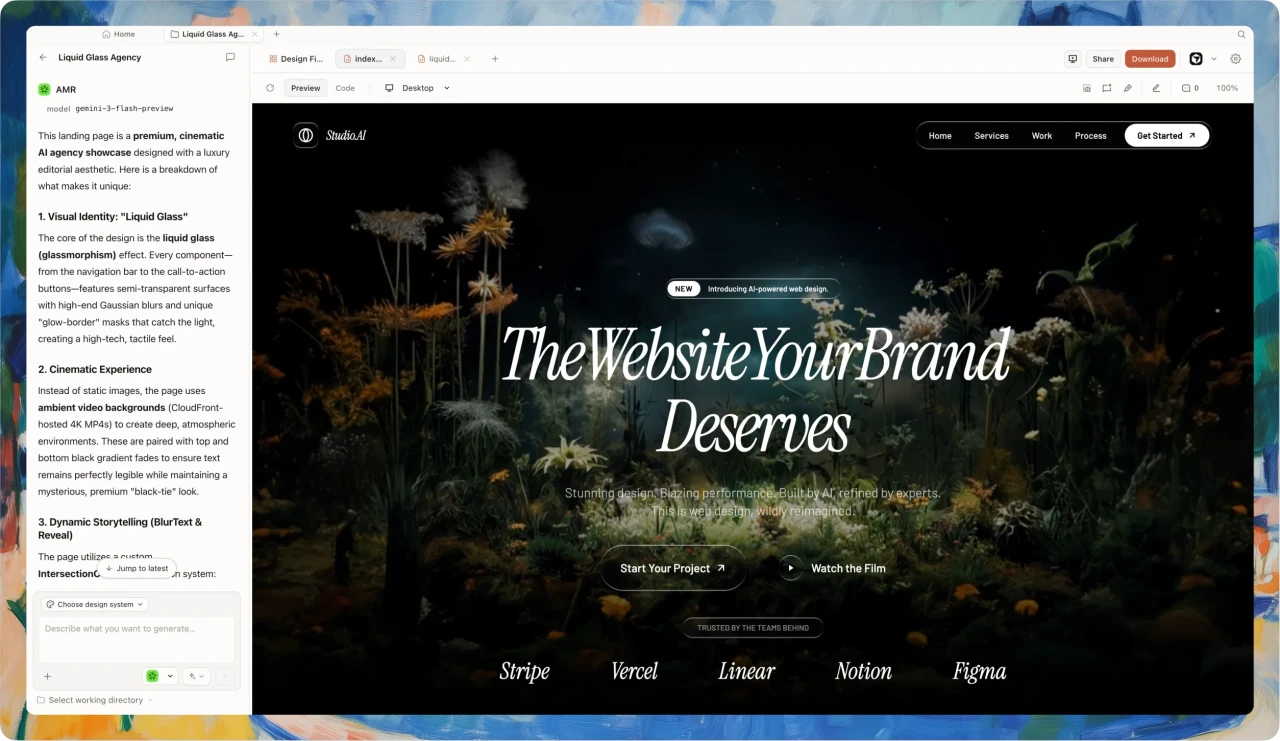
The desktop app.
Studio, brand center, library, memory. Everything on your machine.
Self-hosted.
Apache-2.0, local daemon and web. Deploy inside your own network.
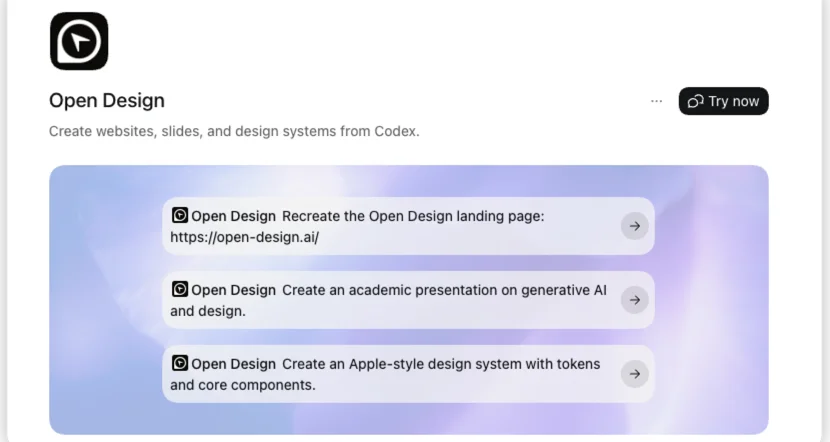
The Codex plugin.
Install once, then call @open-design from any Codex conversation.
Built with Open Design. By real teams.
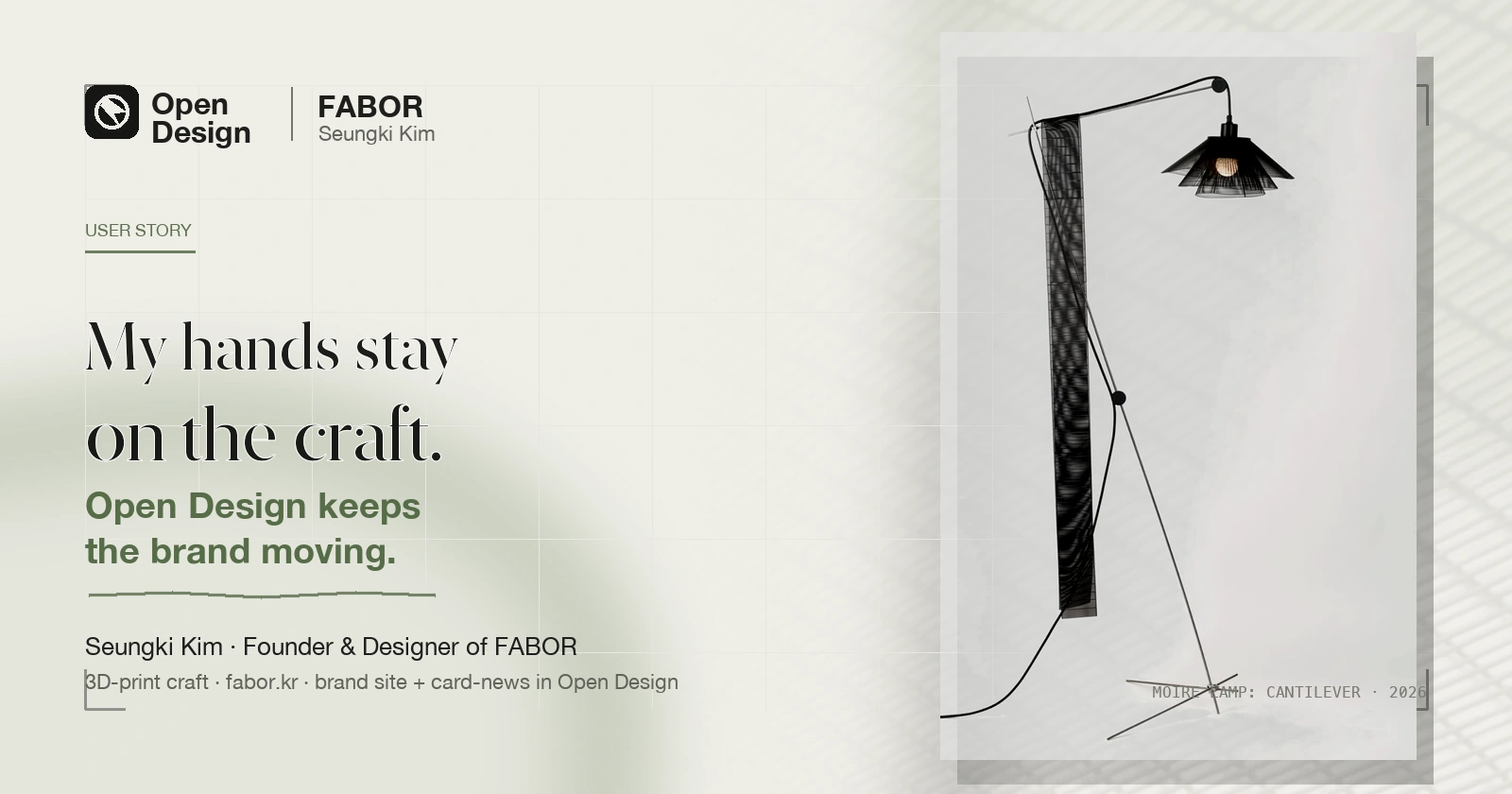 “My hands stay on the craft”Seungki Kim · KAIST-trained designer, founder of FABOR. Brand site and social card-news, built in parallel with his 3D-print craft.Read the story →
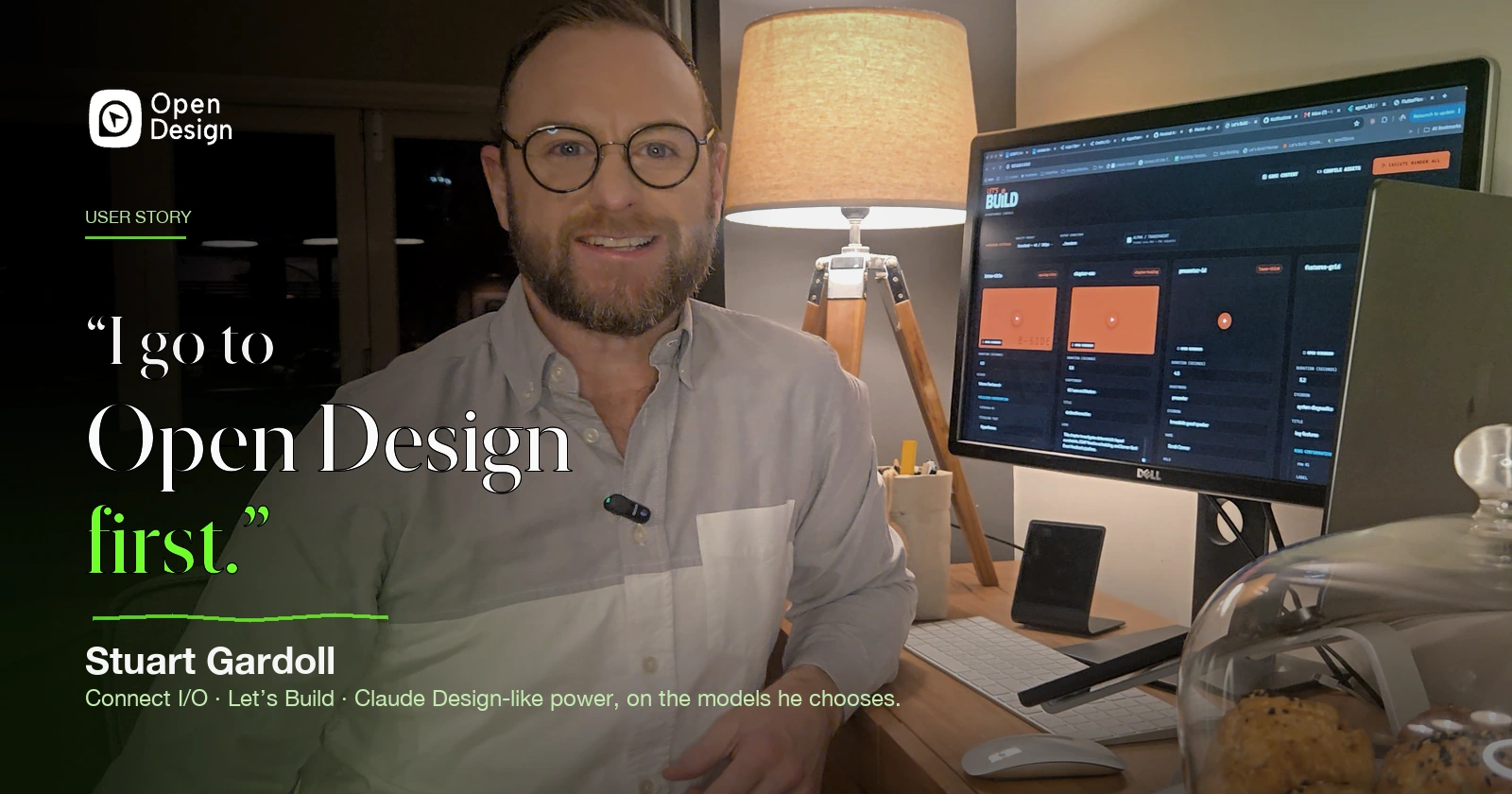 “I go to Open Design first”Stuart Gardoll · AI engineer, founder of Connect I/O. Apps and motion graphics, on whatever model he chooses.Read the story →
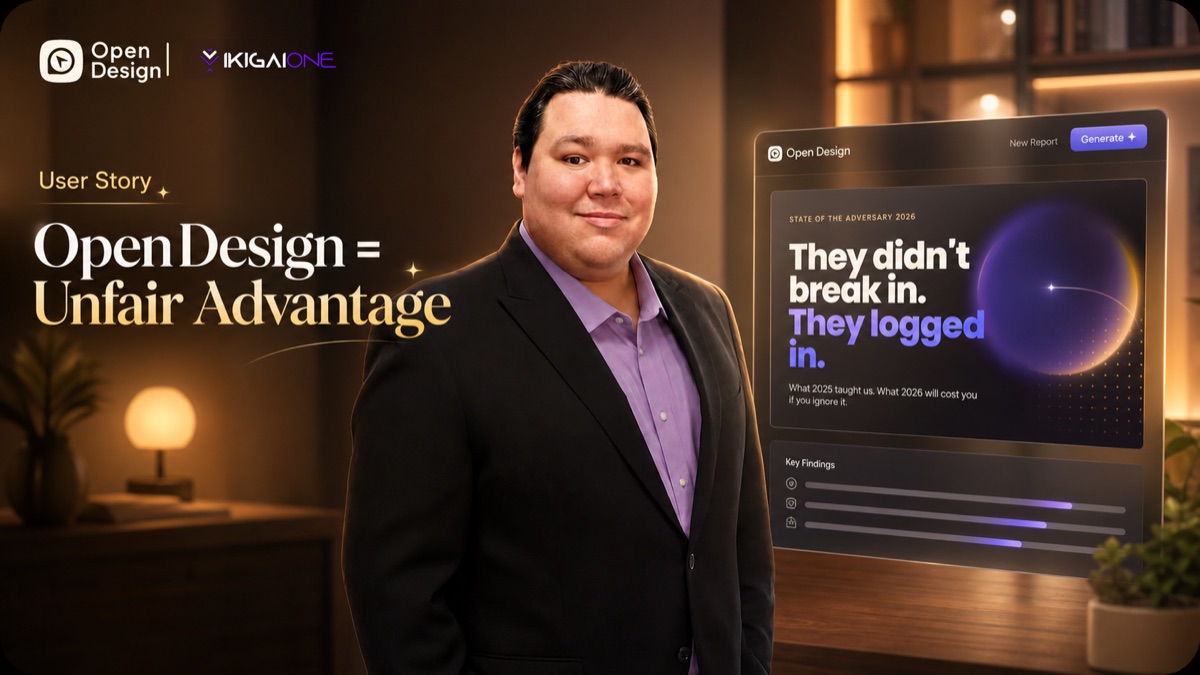 “Open Design is our unfair advantage”Ikigai One · US cybersecurity company. A whole team's design output from one workspace.Read the story →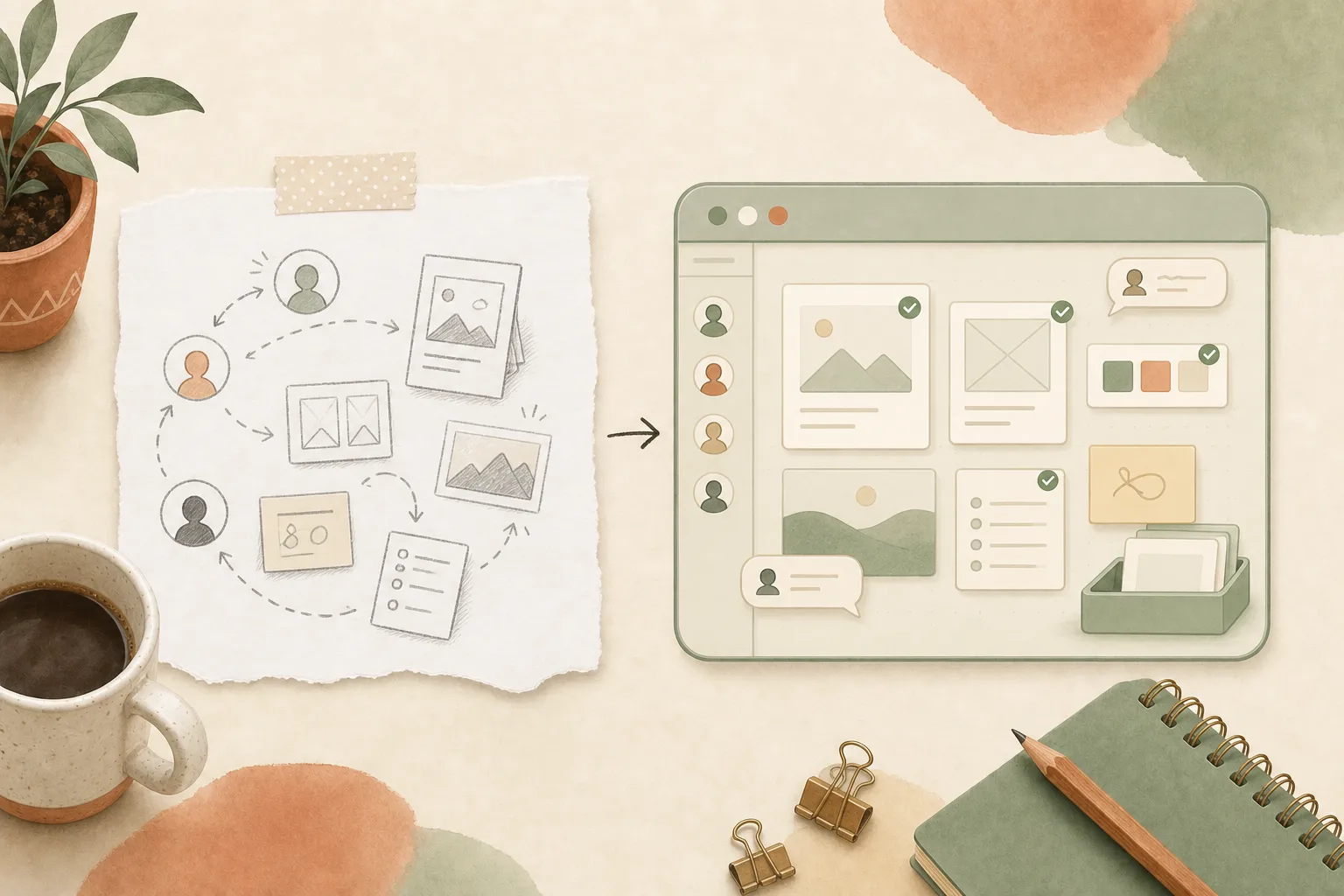
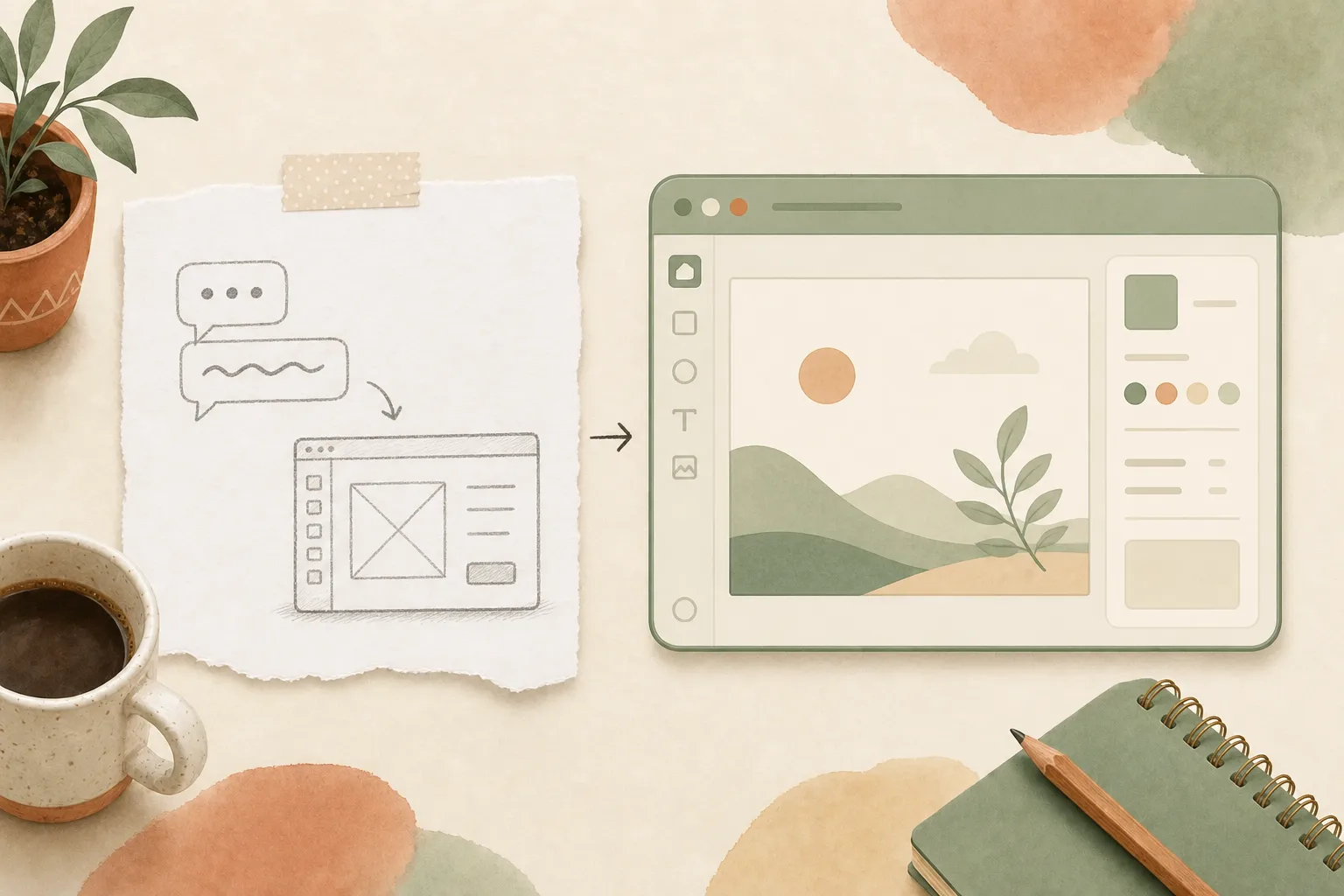
From around the world, 401 contributors
are building Open Design together
Bring frontier AI design power back to every creator’s desk
Open · Local · Agent-native
Open Design FAQ: vibe design workspace, one design system, open source
85.6K+ stars · Apache-2.0 · Free
01What is Open Design?
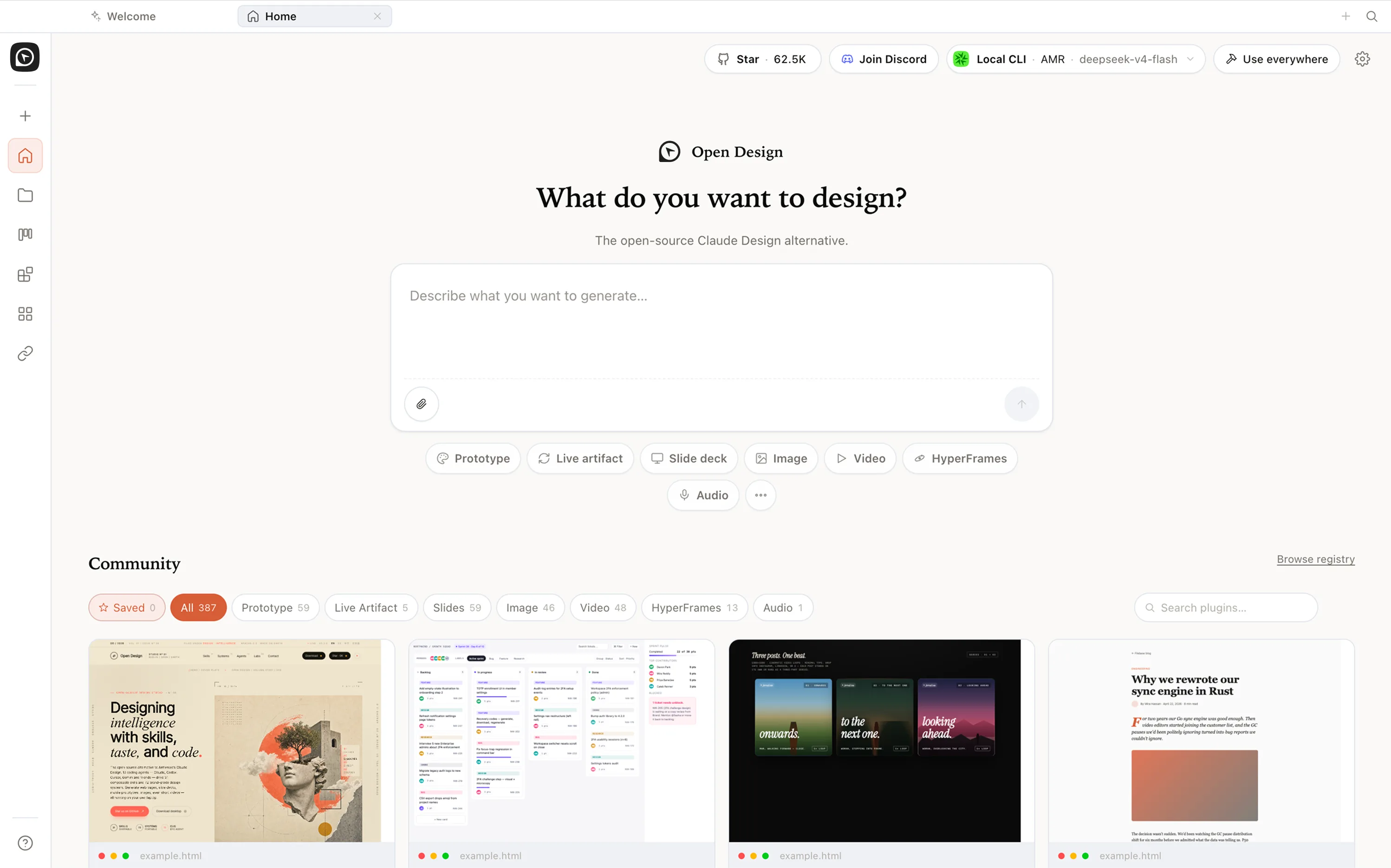
Open Design is the open-source Vibe Design Workspace from the nexu-io/open-design project. It turns the local coding agents you already run (Claude Code, Codex, Cursor, Gemini CLI, OpenCode, Qwen) into a brand design engine: one design system, kept consistent across every artifact, driven by composable skills and portable DESIGN.md systems.
02Is Open Design official?
Yes. The canonical project lives at https://open-design.ai/ and the source is on GitHub at https://github.com/nexu-io/open-design. "Open Design", "OpenDesign", "open-design", and "Open Design AI" all refer to this same project.
03How is Open Design different from Claude Design?
Claude Design is a hosted product tied to a single vendor. Open Design is local-first, open source under Apache-2.0, and BYOK: you bring your own agent, credentials, and DESIGN.md system.
04Is Open Design an open-source Claude Design alternative?
Yes — Open Design is the open-source, local-first Claude Design alternative. Where Claude Design is closed, hosted, and locked to Anthropic models, Open Design is Apache-2.0, runs on your own machine, and is BYOK, so you drive it with Claude Code, Codex, Cursor, Gemini, OpenCode, or Qwen and keep every artifact as files you own.
05What is a vibe design workspace?
A vibe design workspace is where you design by describing intent to an AI agent — from prompt to prototype, web page, slides, or HTML video — instead of hand-placing every element. Open Design is an open-source, agent-native vibe design workspace: it wires the coding agent you already run into a full design workflow, so one tool takes you from a rough idea to production-ready output you own.
06Does Open Design run locally?
Yes. The desktop app, daemon, and skill runtime run on your machine. Generated artifacts land in your project directory instead of being forced through a vendor cloud.
07Which coding agents does Open Design support?
Open Design ships 17 first-party BYOK adapters out of the box: Claude Code, Codex, Cursor, Gemini CLI, GitHub Copilot CLI, Grok, Hermes, Kimi, Devin for Terminal, OpenCode, Qwen, DeepSeek, Pi, Mistral Vibe, Kiro, Kilo, and Qoder. Any adapter that speaks the same skill protocol works — switching agents is a config change, not a redesign.
08Can I self-host or fork it?
Yes. The code is Apache-2.0. You can fork the repo, edit skills, add your own DESIGN.md systems, or run the daemon on your own machines.
09Is my data sent to Anthropic, OpenAI, or Google?
Only your prompt and skill context goes to whichever provider you bring keys for (BYOK). Open Design has no server of its own — the daemon talks to your provider directly. Generated artifacts land as files in your project directory, not in any vendor cloud.
10Can I run Open Design without installing the CLI or desktop app?
Not today. Open Design is local-first by design — the minimum is a local daemon plus an agent (Claude Code, Codex, Cursor, Gemini CLI, or one of the 17 supported adapters). A hosted sandbox is on the roadmap but not the priority: artifacts in your repo beat documents in someone else's database.
11How much does Open Design cost?
The product is free and Apache-2.0 — there is no Open Design subscription. You pay the API costs of whichever provider you use (Anthropic, OpenAI, Google, Mistral, xAI, Moonshot, etc.), billed directly to your account. BYOK keeps both the credentials and the spend on your side of the line.
12Can I self-host Open Design on Vercel, Cloudflare, or my own server?
Yes. The daemon runs anywhere Node 24 runs, and the landing page is a static Astro build that deploys to Cloudflare Pages, Vercel, or Netlify as-is. Teams running shared deployments typically pin the daemon to a machine inside their network and point each developer's CLI at it.
13How do I move my brand into Open Design?
Drop a screenshot or a Figma export into the web UI and ask your agent to extract a brand into a DESIGN.md file. Save that file under design-systems/<your-brand>/ in your repo; every skill then renders in that brand without re-prompting. /alternatives/claude-design/ describes the same flow in step form.
14Can I switch agents without redoing my work?
Yes. Skills and DESIGN.md systems are agent-agnostic — the same SKILL.md file renders against Claude Code, Codex, Cursor, Gemini CLI, GitHub Copilot, Grok, Hermes, Qwen, or any other supported adapter. Switching agents is a config change in the daemon, not a redesign.
15What's on the Open Design roadmap?
The live roadmap is at docs/roadmap.md in the GitHub repo, and weekly release notes ship through GitHub Releases. Major themes for the next quarter: more agent adapters, richer template families (3D, video, audio), and an optional shared-daemon mode for design teams.
16Does Open Design work inside Codex?
Yes. Install the Open Design Plugin for Codex once, then call @open-design from any Codex conversation and get a real, editable design artifact back. Setup takes one pasted prompt; see the Codex plugin page for details.
17What is a brand system, and what does self-evolving mean?
A brand system (brand kernel) is the single source of truth for your visual identity: colors, type, radius, imagery, voice. Every artifact inherits it, and every choice you make feeds back into it, so the system keeps evolving and each result lands more on-brand than the last. Change one token and your work recalculates.
18Can my whole team share one workspace?
Yes. Team Workspace shares the brand system, template library, and projects across your team: everyone generates with the same kernel, artifacts land in one library, and changes to the system recalculate the team's work. See the pricing page for team plans.